English version below
📍 Hebdów, 30 km na północ od Krakowa
📅 I turnus 4-10 lipca 2027; II turnus 11-17 lipca 2027
🎓 Poziomy: początkujący – zaawansowany
🌍 Języki: polski / angielski
📩 Zapisy: Ten adres pocztowy jest chroniony przed spamowaniem. Aby go zobaczyć, konieczne jest włączenie w przeglądarce obsługi JavaScript.
Quod scripsi, scripsi.

IĘDZYNARODOWA Letnia Szkoła Kaligrafii od ponad dekady gromadzi miłośników pięknego pisania z różnych zakątków świata - nauczyciele kaligrafii przyjeżdżali do nas na przestrzeni lat z Niemiec, Francji, Iranu i Kanady, podobnie uczniowie z wielu kontynentów zjeżdżali się do tego starego opactwa pielęgnować tę szlachetną sztukę. W tym roku Letnia Szkoła Kaligrafii odbywa się po raz piętnasty, natomiast po raz dziesiąty w ponorbertańskim klasztorze w zakolu Wisły na północ od Krakowa.
Ani opis dnia, ani żadne zdjęcia nie oddadzą rzeczywistego klimatu wakacyjnych spotkań z kaligrafią. Niektórzy uczestnicy przyjeżdżają na Letnią Szkołę od kilku lat, niektórzy wyjeżdżając z Hebdowa jadą od razu na Letnią Szkołę w Wigrach. Kurs teoretycznie trwa 30 h przez tydzień, ale uczymy się bez przerwy, obserwując weteranów, czyli wielokrotnych uczestników, innych nauczycieli, spędzając także czas rekreacji na przyjemnym trenowaniu liter. Spotkania wieczorne potrafią przedłużyć się, a skryptoria nie pustoszeją nawet po północy. Samo miejsce naszych warsztatów idealnie sprzyja skupieniu i pracy twórczej, bowiem hebdowskie opactwo przez wieki gromadziło manuskrypty, a norbertanie zajmowali się ich przepisywaniem. Dzisiaj w tej aurze dzięki wspaniałym warunkom stworzonym przez kompetentną obsługę hotelu i załogę hotelowej restauracji możemy się w pełni oddać pasji.
Tutorzy i tematy
Uczestnikom proponujemy udział w warsztatach w jednej z grup:
I turnus (od niedzieli do soboty, 4-11 lipca 2027)
- Paul Antonio aka PAScribe - kurs kaligraficzny "Copperplate & Fraktura" (język angielski)
An intensive five-day workshop exploring two distinctive and influential traditions of Western calligraphy: Fraktur and Copperplate.Although these scripts belong to different historical periods and are written with different tools, they offer a fascinating opportunity to explore the principles of letter construction, rhythm, proportion and ornament. Throughout the workshop, we will investigate their individual characteristics while discovering the underlying structures that connect them.FrakturWe will begin by exploring the structure and distinctive character of Fraktur. Working first with pencil, we will study the geometric foundations of its letterforms, their proportions, rhythm and characteristic angular shapes. We will also look at the relationship between the letters and their flourishing, discovering how ornamental forms can grow naturally from the structure of the script.Moving on to broad-edged tools, we will practise writing Fraktur with attention to precision, consistency and the expressive possibilities of the script. Historical examples will provide inspiration for understanding both its traditional forms and its more elaborate decorative possibilities.CopperplateWe will then turn to Copperplate, exploring Paul Antonio's geometric approach to this elegant pointed-pen script. Beginning with the underlying skeleton of the letters, we will investigate their construction, symmetry, proportions and characteristic angles.Through carefully structured exercises, we will develop control, precision and fluidity, gradually moving from geometric principles to writing with a pointed nib and ink. We will also explore the relationship between individual letterforms and flourishing, learning how ornamental strokes can complement and enhance the written text.Two TraditionsThe final part of the workshop will bring the two scripts into dialogue. By comparing their structures, rhythms and ornamental possibilities, we will gain a deeper understanding of the principles that distinguish them as well as those they share.This five-day programme offers an opportunity to study two remarkable calligraphic traditions in depth, combining historical awareness, geometric analysis and practical work with the pen. Participants will develop a more conscious approach to letter construction and discover new possibilities for expressive and ornamental writing.Level - preintermediate.
- Grzegorz Barasiński - kurs kaligraficzno-iluminatorski (język polski i angielski) - Najśmieszniejsze iluminacje świata
Wyjątkowa podróżą do świata dawnych skrybów i iluminatorów: spróbujemy odtworzyć atmosferę średniowiecznego skryptorium, przybliżając sobie nie tylko dawne techniki pisania i zdobienia rękopisów, lecz także materiały, narzędzia i warunki pracy średniowiecznych rzemieślników.Chcemy możliwie wiernie odtworzyć doświadczenie pracy z rękopisem. Sięgniemy po pergamin, ptasie pióra, przede wszystkim gęsie, oraz historyczne materiały pisarskie i malarskie. Zrezygnujemy z syntetycznych pigmentów i współczesnych udogodnień tam, gdzie będzie to możliwe. Będziemy przygotowywać i ucierać pigmenty według dawnych receptur, korzystając z muszli jako naczyń malarskich. Ograniczymy użycie plastiku i współczesnych zamienników, aby jak najwięcej elementów naszej pracy odpowiadało realiom dawnego warsztatu.Drolerie – humor na marginesach rękopisówTematem przewodnim części iluminatorskiej będą drollerie, czyli niezwykłe, często zabawne i groteskowe przedstawienia, które średniowieczni artyści umieszczali na kartach rękopisów. Francuskie słowo drôlerie oznacza żart, figiel lub coś dziwacznego. I rzeczywiście: na marginesach średniowiecznych ksiąg można spotkać najdziwniejsze stworzenia, zwierzęta zachowujące się jak ludzie, ludzi w zaskakujących sytuacjach, hybrydy i sceny pełne absurdu.Przyjrzymy się marginaliom, czyli dekoracjom i przedstawieniom umieszczanym na marginesach karty, oraz bordiurom – ozdobnym ramom biegnącym wokół tekstu. Poznamy ich funkcje, formy i wzajemne relacje, a następnie stworzymy własne kompozycje inspirowane średniowieczną wyobraźnią.Otwarty charakter tematu pozwoli nam swobodnie dobierać pismo do projektowanych iluminacji. Będziemy mogli pracować zarówno protogotykiem, teksturą czy frakturą, jak i łączyć różne odmiany pisma w obrębie jednej karty. Najważniejsze będzie stworzenie spójnej, pełnej charakteru kompozycji, w której tekst i obraz będą ze sobą współgrać.
II turnus (od niedzieli do soboty - 11-17 lipca 2027)
- Julia Bangert - kurs kaligraficzno-iluminatorski "Wondrous Medieval Creatures: Create Your Own Bestiary Page" (angielski).
Let’s travel back to the Middle Ages and explore the fascinating world of bestiaries. A bestiary is a kind of medieval reference book about animals, in which real animals and mythical creatures appear side by side. In this workshop, we'll create an illuminated manuscript page in the tradition of this fascinating genre.What to Expect:
Composition
We’ll draw inspiration from genuine medieval examples to design our own authentic bestiary page.Calligraphy
You’ll learn an early, rounded, flowing form of Textura and practice the rhythm of writing to take the first step toward creating your manuscript page.Gold
You’ll learn how to make a simple gold ground using just two ingredients, which you can use to achieve a simple yet striking real-leaf gilding effect.Initial
A small, decorated initial gives the text on our manuscript page a festive opening.Miniature
The highlight of our bestiary page will be the animal miniature. Surrounded by a decorated frame, your creature will tell its very own story.Escape the hustle and bustle of everyday life for a week at the scriptorium, become a scribe and illuminator, and walk away with your very own page from a medieval bestiary. - Daniel Dostal aka Signum et Imago - kurs kaligraficzny "HEBDOVIA: Od skryptorium po portowy kantor. Kaligraficzna podróż przez Miasto Liter ". (język polski)
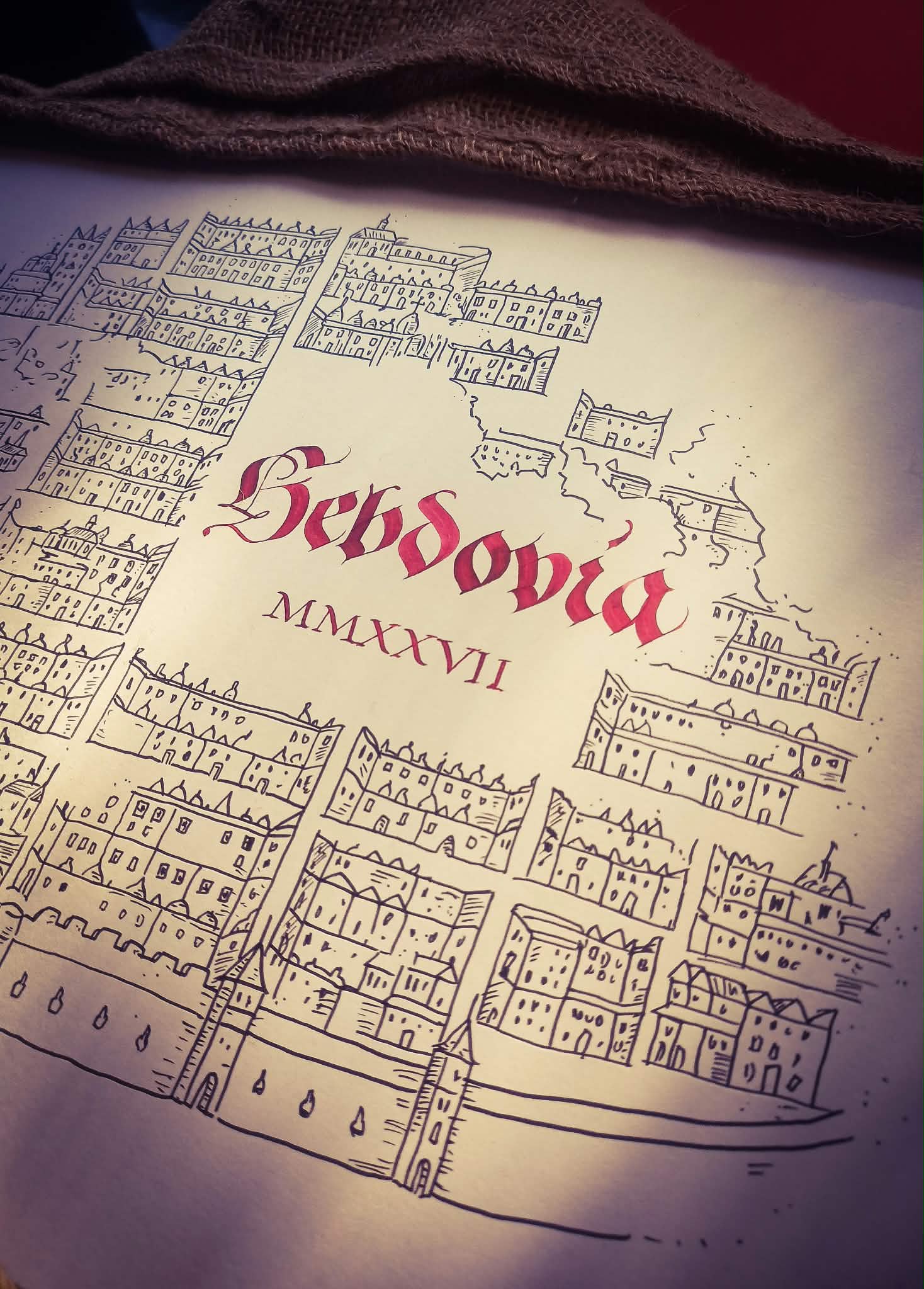
Na klasztornym murze w Hebdowie przetrwał tajemniczy ślad – zatarta przez czas mapa nieznanego miasta, która od wieków wita przybywających tu wędrowców. Być może kreśliła ją ręka mnicha marzącego o Niebiańskim Jeruzalem, a może była drogowskazem dla dawnych pielgrzymów; tego się nie dowiemy. Jednak dla nas owa mapa stanie się kluczem do bram Hebdovii – Miasta Liter. Wyruszając w tę kaligraficzną podróż, przejdziemy przez jego gwarne targowiska i portowe nabrzeża, gdzie pospieszna kreska kupców i rzemieślników spinała rachunki, towary i ludzkie losy. Klasztorne krużganki uchylą przed nami drzwi swoich skryptoriów, ukazując kontemplacyjny wymiar kaligrafii i duchowe prawdy zakodowane w starannie stawianych literach. Zajrzymy również do uniwersyteckiej auli, gdzie słowo pisane, zamknięte w gęstych od glos i skrótów kodeksach, przekazywało kolejnym pokoleniom skarb wiedzy. Stamtąd ruszymy na zamek i do ratuszowych izb, gdzie za sprawą kancelaryjnych piór rodziły się przywileje, wyroki i publiczny porządek. Nie ominiemy także ciemniejszych zaułków i przedmieść, w których litera zrzucała oficjalny gorset, stając się surowym zapisem ulicy i zwykłego ludzkiego zgiełku.
- Grzegorz Barasiński - kurs kaligraficzno-iluminatorski "Kryształowe litery" (język polski i angielski).
Drugi turnus Letniej Szkoły Kaligrafii poświęcimy renesansowej sztuce pisania i iluminacji. Poznamy italikę, czyli kursywę humanistyczną. Przyjrzymy się ich konstrukcji, proporcjom i rytmowi, odkrywając różnorodność renesansowych form pisma – od starannie komponowanych liter po swobodne, szybkie kursywy użytkowe. W części iluminatorskiej wykonamy inicjały iluzjonistyczne, inspirowane techniką trompe-l’œil. Punktem odniesienia będzie rękopis Urb. lat. 264 ze zbiorów Biblioteki Watykańskiej, słynący z niezwykłych inicjałów klejnotowych. Ich trzony imitują kryształ górski, a złote detale przywodzą na myśl kunsztownie wyroby jubilerskie. Stworzymy własne kryształowe inicjały, wykorzystując światło, cień i modelunek, by nadać literom iluzję przestrzenności.
Warunki uczestnictwa i zgłoszenia
Aby wziąć udział w Letniej Szkole Kaligrafii 2027, należy wysłać zgłoszenie mailowo na Ten adres pocztowy jest chroniony przed spamowaniem. Aby go zobaczyć, konieczne jest włączenie w przeglądarce obsługi JavaScript.. Zapisy przyjmujemy od listopada 2026 roku. Na warsztaty można uczęszczać bez zakwaterowania w klasztorze. Ewentualne wycieczki popołudniowe, wynajem sprzętu lub dojazd do Hebdowa są opłacane samodzielnie przez uczestników.
Ceny
| Cena regularna | Cena promocyjna przy wczesnych zapisach do końca stycznia 2027 oraz dla uczestników biorących udział w dwóch turnusach |
||
| Zakwaterowanie z pełnym wyżywieniem (śniadania, obiady, kolacje) |
Pokój 1-osobowy | wkrótce zł / turnus |
1700,00 zł / turnus cena promocyjna |
| Miejsce w pokoju 2-osobowym | wkrótce zł / turnus |
1550,00 zł / turnus cena promocyjna |
|
| Warsztaty i materiały | Warsztaty Paula Antonia | 2290,00 zł/turnus |
1895,00 zł / turnus |
| Warsztaty Julii Bangert | 1550,00 zł/turnus | 1350,00 zł / turnus cena promocyjna |
|
| Warsztaty Grzegorza Barasińskiego i Daniela Dostala | 1350,00 zł/turnus | 1250,00 zł / turnus cena promocyjna |
Cennik obowiązujący od dnia 15 listopada 2026.
Przy wczesnym zapisie do końca stycznia 2027 i wniesieniu opłaty rezerwacyjnej wysokości 400,00 zł w przeciągu 7 dni od dnia potwierdzenia przyjęcia zgłoszenia uczestnik może skorzystać z ceny promocyjnej. Proszę zwracać uwagę na numer konta podany w odpowiedzi na zgłoszenie! Opłatę rezerwacyjną należy uiścić w przeciągu 7 dni od dnia potwierdzenia przyjęcia zgłoszenia. Decyduje kolejność zgłoszeń, a zapisy przyjmujemy do wypełniania miejsc (dotyczy to zwłaszcza pokojów hotelowych).
Potrzebę otrzymania faktury prosimy zgłaszać przy zapisie w mailu, podając dane (nazwę, adres, NIP).
Cena promocyjna obejmuje także uczniów biorących udział w dwóch tygodniach Letniej Szkoły Kaligrafii. Wymagane jest wtedy wniesienie podwójnej opłaty rezerwacyjnej w przeciągu 7 dni.
Dopłata za diety specjalne 250,00 zł/od osoby za turnus (np. wegetariańska, bezglutenowa, wegańska, bez laktozy itp.).
Wydarzenie na FB https://www.facebook.com/events/2353803315449997/
W razie pytań chętnie doradzimy i wszystko wyjaśnimy - proszę pisać na Ten adres pocztowy jest chroniony przed spamowaniem. Aby go zobaczyć, konieczne jest włączenie w przeglądarce obsługi JavaScript.
Ramowy plan dnia
8.00 śniadanie
9.00 wspólny wykład
10.00-14.00 warsztaty w grupach
14.00 obiad
rekreacja i praca własna
17.00-19.00 konsultacje
19.00 kolacja
20.00 spotkanie wieczorne (wykłady, prelekcje uczestników, wieczory filmowe)

Scribere necesse est
vivere non necesse est
International
Summer School of Calligraphy
Hebdów 2027
📍 Hebdów, 30 km north of Kraków, Poland
📅 Week I: 28 June – 4 July 2026; Week II: 5–11 July 2026
🎓 Levels: beginner – advanced
🌍 Language: Polish / English
📩 Registration: Ten adres pocztowy jest chroniony przed spamowaniem. Aby go zobaczyć, konieczne jest włączenie w przeglądarce obsługi JavaScript.
Quod scripsi, scripsi.
 NE of the mottoes adopted in previous years by the Summer School of Calligraphy and Manuscript Illumination was Scribere aude! - an invitation to dare to write, and an encouragement to pursue something worthwhile, enriching and consoling, particularly in times beset by epidemics and wars.
Next year, we hope to gather once more in this magnificent cloister, to devote our time to writing and reflecting upon words of lasting significance. One of our earlier mottoes declared that one does not enter the scriptorium with impunity. Consider yourselves warned: taking part in the Summer School means becoming part of a company of exceptionally creative and inspiring people!
Vita sine litteris mors est et hominis vivi sepultura - life without letters is death, and the grave of a living man. Yet litterae encompass far more than the art of calligraphy. They stand for a conscious refusal to settle for a life confined to immediate necessities, devoid of books, literature and intellectual cultivation. Calligraphy belongs to the very heart of the humanist tradition; it is one of the ways in which we may become more fully human.
This year's motto comes from the Bible and carries with it a sense of completion, a fitting summation of the ten years during which this monastery has welcomed us: those who have gathered here to write, to teach, to learn and to share their passion for the written word. For some, the coming Summer School will be their first; for many others, it will be a return to a place they know well. For those who return, it will also be an opportunity to look back upon what they have written over the years, often with considerable effort and perseverance, and to consider whether the meaning of those words has endured beyond the passing decade, perhaps even proving prophetic.
The words Quod scripsi, scripsi were spoken by Pontius Pilate in response to those who objected to the inscription he had placed above Christ on the Cross: Iesus Nazarenus Rex Iudaeorum - Jesus of Nazareth, King of the Jews. What was meant as an accusation against Jesus, perhaps even a gesture of mockery, became, quite unintentionally, a proclamation of the truth. In the light of the Passion, Pilate's inscription acquired a meaning far beyond anything he may have intended. His words thus became, in a sense, an unwitting confession of faith: a declaration of Christ's kingship, made by a man who may not have understood the full significance of what he had written. And perhaps this is something worth remembering about the written word: we do not always know, at the moment of writing, how profoundly true our words may prove to be in the fullness of time.
Tutors and topics
Participants may follow one of the courses:
Week 1 (from Sunday to Saturday, 28 June - 4 July 2026)
- Paul Antonio aka PAScribe - Calligraphy Course "Copperplate & Fraktura" (English)
An intensive five-day workshop exploring two distinctive and influential traditions of Western calligraphy: Fraktur and Copperplate.Although these scripts belong to different historical periods and are written with different tools, they offer a fascinating opportunity to explore the principles of letter construction, rhythm, proportion and ornament. Throughout the workshop, we will investigate their individual characteristics while discovering the underlying structures that connect them.FrakturWe will begin by exploring the structure and distinctive character of Fraktur. Working first with pencil, we will study the geometric foundations of its letterforms, their proportions, rhythm and characteristic angular shapes. We will also look at the relationship between the letters and their flourishing, discovering how ornamental forms can grow naturally from the structure of the script.Moving on to broad-edged tools, we will practise writing Fraktur with attention to precision, consistency and the expressive possibilities of the script. Historical examples will provide inspiration for understanding both its traditional forms and its more elaborate decorative possibilities.CopperplateWe will then turn to Copperplate, exploring Paul Antonio's geometric approach to this elegant pointed-pen script. Beginning with the underlying skeleton of the letters, we will investigate their construction, symmetry, proportions and characteristic angles.Through carefully structured exercises, we will develop control, precision and fluidity, gradually moving from geometric principles to writing with a pointed nib and ink. We will also explore the relationship between individual letterforms and flourishing, learning how ornamental strokes can complement and enhance the written text.Two TraditionsThe final part of the workshop will bring the two scripts into dialogue. By comparing their structures, rhythms and ornamental possibilities, we will gain a deeper understanding of the principles that distinguish them as well as those they share.This five-day programme offers an opportunity to study two remarkable calligraphic traditions in depth, combining historical awareness, geometric analysis and practical work with the pen. Participants will develop a more conscious approach to letter construction and discover new possibilities for expressive and ornamental writing.Level - preintermediate. All participants MUST have a working knowledge of copperplate script and fraktur, a working knowledge of pointed and broad edged nibs is also essential as these scripts and tools use are not being taught in course, I will take what you know and help you raise the bar on it, this is about improving knowledge and application.
Sing up early as there is homework to start! ;)
- Grzegorz Barasiński - Calligraphy and Manuscript Illumination Course "The Merriest Illuminations in the World"
A unique journey into the world of medieval scribes and illuminators. We will attempt to recreate the atmosphere of a medieval scriptorium, exploring not only the traditional techniques of writing and illuminating manuscripts, but also the materials, tools and working conditions of medieval craftsmen.We want to recreate the experience of working with a manuscript as faithfully as possible. We will use parchment, quills – primarily goose quills – and historical writing and painting materials. Wherever possible, we will dispense with synthetic pigments and modern conveniences. We will prepare and grind pigments according to historical recipes, using shells as paint containers. We will limit the use of plastic and modern substitutes so that as many aspects of our work as possible reflect the realities of a medieval workshop.Drolleries – Humour in the Margins of ManuscriptsThe central theme of the illumination part of the course will be drolleries: extraordinary, often humorous and grotesque images that medieval artists placed on the pages of manuscripts. The French word drôlerie means a joke, a prank or something bizarre. And indeed, the margins of medieval books are populated by the strangest creatures, animals behaving like humans, people caught in unexpected situations, hybrid beings and scenes full of absurdity.We will examine marginalia – decorations and images placed in the margins of a manuscript page – as well as bordures, ornamental borders running around the text. We will explore their functions, forms and relationships, and then create our own compositions inspired by the medieval imagination.The open-ended nature of the theme will allow us considerable freedom in choosing the scripts to accompany our illuminations. We may work in protogothic, textura or Fraktur, or combine different script styles within a single page. The most important thing will be to create a coherent, characterful composition in which text and image work together.
Week 2 (from Sunday to Saturday - 11-17 July 2027)
- Julia Bangert - Calligraphy-Illumination Course "Wondrous Medieval Creatures: Create Your Own Bestiary Page" (English).
Let’s travel back to the Middle Ages and explore the fascinating world of bestiaries. A bestiary is a kind of medieval reference book about animals, in which real animals and mythical creatures appear side by side. In this workshop, we'll create an illuminated manuscript page in the tradition of this fascinating genre.What to Expect:
Composition
We’ll draw inspiration from genuine medieval examples to design our own authentic bestiary page.Calligraphy
You’ll learn an early, rounded, flowing form of Textura and practice the rhythm of writing to take the first step toward creating your manuscript page.Gold
You’ll learn how to make a simple gold ground using just two ingredients, which you can use to achieve a simple yet striking real-leaf gilding effect.Initial
A small, decorated initial gives the text on our manuscript page a festive opening.Miniature
The highlight of our bestiary page will be the animal miniature. Surrounded by a decorated frame, your creature will tell its very own story.Escape the hustle and bustle of everyday life for a week at the scriptorium, become a scribe and illuminator, and walk away with your very own page from a medieval bestiary. - Daniel Dostal aka Signum et Imago - Calligraphy Course: "HEBDOVIA: From the Scriptorium to the Port Trading House. A Calligraphiy Journey Through the City of Letters" (Polish)
A mysterious trace has survived on the monastery wall in Hebdów: a faded map of an unknown city, which has welcomed travellers for centuries. Perhaps it was drawn by a monk dreaming of the Heavenly Jerusalem; perhaps it once guided pilgrims on their way. We shall never know. For us, however, this map will serve as the key to Hebdovia – the City of Letters.Our calligraphic journey will take us through the city's bustling marketplaces and harbour quays, where merchants and craftsmen used hurried hands to record their accounts, goods and dealings. In the monastery cloisters, we will explore the scriptoria and the contemplative dimension of calligraphy, discovering the spiritual meaning embedded in the careful formation of letters.We will then visit the university, where densely annotated manuscripts preserved and transmitted knowledge across generations. At the castle and in the town hall, we will encounter the formal scripts of administration, through which privileges were granted, judgements recorded and civic order maintained.Finally, we will venture into the darker alleys and outlying districts, where writing took on a less formal character, capturing the everyday language and bustle of urban life.
- Grzegorz Barasiński - Calligraphy and Manuscript Illumination Course. "Renaissance Scripts and Crystal Initials" (Polish & English)
The second week of the Summer School of Calligraphy will be devoted to the art of Renaissance writing and illumination. We will explore Italic, also known as Humanist Cursive, as well as the Cancelleresca hand. We will examine their construction, proportions and rhythm, discovering the diversity of Renaissance scripts – from carefully formed letterforms to freer, faster cursive hands developed for everyday writing.In the illumination component, we will create illusionistic initials inspired by the trompe-l’œil technique. Our point of reference will be manuscript Urb. lat. 264 from the Vatican Library, renowned for its remarkable jewel initials. Their vertical strokes imitate rock crystal, while the golden details evoke finely crafted jewellery. We will create our own crystal initials, using light, shadow and modelling to give the letters an illusion of three-dimensionality.This session will bring together the elegance of Renaissance writing and the artistry of illusionistic illumination – an exploration of calligraphy, painting and historical decorative techniques.
Everyone who loves manuscripts, medieval art, calligraphy, manuscript illumination or any related arts used in making handwritten books, is invited to Hebdów, where we will turn the cool chambers of the former Norbertine monastery into a huge scriptorium. The acknowledged tutors will teach small groups of aspiring calligraphers and illuminators, beginners as well as advanced learners. Over a week the participants will have the opportunity to take part in 30 hours of lectures, workshops and demonstrations, which will culminate in a final project. The hard-working week will end with a vernissage on the 3rd and 10th of July 2026.
Enrolment and conditions
To enrol, please send an e-mail to us at Ten adres pocztowy jest chroniony przed spamowaniem. Aby go zobaczyć, konieczne jest włączenie w przeglądarce obsługi JavaScript.. Both beginners and more advanced calligraphers are welcome.
It is also possible to take part in the Summer School without staying at the abbey.
The price does not include travel or additional costs such as afternoon excursions or the hire of sports equipment.
We help the participants to get the village Hebdów near Nowe Brzesko from Kraków.
Prices
| Regular price |
Promotional price early birds enrollement till 31st January 2026 and two-weeks enrollement |
||
| Accomodation with full board (breakfast, lunch, dinner) |
a single room with full board | soon PLN / week |
1750 PLN / week |
| a double room with full board per person |
soon PLN/ week |
1550 PLN / week |
|
| Workshop & materials |
Paul Antonio | 2290 PLN / week |
1895 PLN / week |
| Julia Bangert | 1550 PLN / week | 1350 PLN / week | |
|
Grzegorz Barasinski Daniel Dostal |
1350 PLN / week | 1250 PLN / week |
Early-bird price till 31st January 2027
Additional fee for special diet 250 PLN per person for the week ( vegetarian, vegan, lactose-free etc.).
FB event https://www.facebook.com/events/2353803315449997/
FAQ
How can I get to Hebdów?
Hebdów is a village near the town Nowe Brzesko. If you need to get to the hotel, look for the connection to Nowe Brzesko. You may use https://www.e-podroznik.pl or post a question on the FB event site - someone might pick you up and we know that it frequently happens - calligraphy students are so willing to help.
What calligraphy materials shall I take with?
You needn't take any materials with but the favourite ones you always use while writing. We provide ink, paper as well as penholders with nibs. Additionally, there's always a hand-held calligraphy shop where you can purchase different items and take them home.
Is it possible to purchase calligraphy equipment during the Summer School School?
Yes, if you would like to buy some new calligraphy stuff, there will a calligraphy booth of the Calligrapher's Shop. You can also place an order and pick it in Hebdów.
What is a timetable for the Summer School of Calligraphy?
8 am breakfast
9 am lecture
10 am 2 am workshop
2 am lunch
leisure time
5 pm consultation and workshop
7 pm dinner
8 pm evening meeting
When do we start, when do we finish?
Generally, we gather on Sunday, we leave on Saturday after breakfast. The workshop is from Monday to Friday, so Sunday is a calm day to safely arrive to Hebdów.
#summerschoolofcalligraphy #letniaszkolakaligrafii